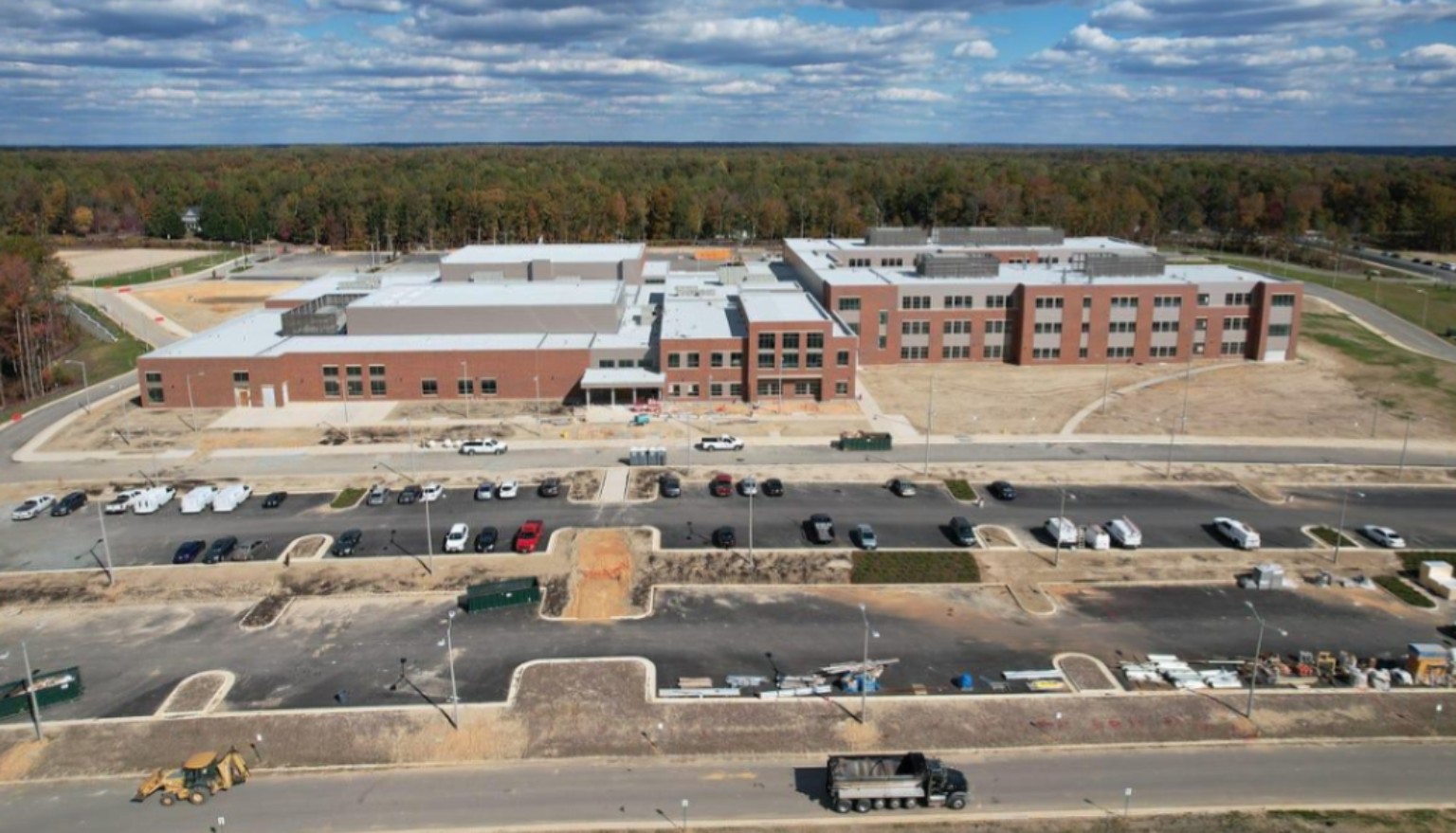
Stafford County voters will face a significant tax and school-funding question on November 3, 2026.
The referendum asks whether the Board of Supervisors should be authorized to impose an additional local sales and use tax of up to 1%, with the resulting revenue restricted to qualifying public-school construction and major renovation projects.
It would give supervisors the legal authority to consider the tax. It would not itself impose the tax, approve $1.9 billion in projects or decide which projects receive funding.
What would actually change?
Stafford Schools says the combined state and local sales-tax rate is currently 5.3%. If voters approve the referendum and supervisors later impose the full additional percentage point, the rate on affected purchases would rise to 6.3%.
The additional tax would apply to purchases already covered by the applicable retail sales-tax base. Public information about the proposal says food purchased for home consumption and essential personal-hygiene products would be exempt. Local reporting also says prepared food would not be subject to this particular additional tax. Visitors and commuters making other taxable purchases in Stafford would contribute alongside county residents.
How much money could it raise?
Stafford Schools says the tax could generate at least $13 million annually. County estimates reported by the Fredericksburg Free Press put the annual range at approximately $13 million to $20 million.
The same public presentation reported a much larger cumulative range of $349 million to $537 million. Because that total is not consistent with only ten years at the stated annual rate, Save Stafford is describing it as a long-range projection rather than repeating it as a ten-year estimate.
Where could the money go?
The revenue would be restricted to qualifying school capital projects involving new construction or major renovations, including qualifying bond and loan financing costs. It could not simply become another source for the school division’s regular operating budget.
According to Stafford Schools, the money could not fund employee salaries or benefits, instructional programs and materials, routine supplies, daily operating expenses or non-school county projects. The division also says it would supplement rather than replace existing local support for school facilities.
Stafford’s $1.9 billion school capital plan
The School Board’s FY2027 Capital Improvement Plan identifies more than $1.9 billion in school capital costs, including major projects and repair, replacement and renovation work. The division cautions that not every item in the plan would necessarily qualify for this sales-tax revenue.
The plan includes replacement of Drew Middle School, Hartwood Elementary and the Rising Star complex, critical-system restoration at several schools and an addition and renovation to North Stafford High School’s performing-arts wing. Stafford Schools also identifies 17 currently unfunded projects, including three new schools, four elementary-school replacements, six critical-systems or restoration projects, an early-childhood addition and transportation or support-facility improvements.
Some Stafford school buildings are decades old
The five oldest facilities identified by Stafford Schools are Rising Star Early Childhood Education Center at 95 years, the Alvin York Bandy Administrative Complex at 92 years, Drew Middle School at 75 years, Ferry Farm Elementary at 69 years and Hartwood Elementary at 63 years. Three additional facilities are more than 50 years old.
Drew illustrates the scale of an individual replacement. The existing school was constructed in 1951, and Stafford Schools lists the replacement at approximately $107.1 million, designed for about 1,100 students.
The referendum does not approve those projects
A “yes” vote would not approve every project in the CIP, authorize $1.9 billion in construction, impose the full 1% rate or decide which projects receive sales-tax revenue. Project selection, debt capacity, timing, procurement and implementation would remain separate public decisions.
Supervisors would still have another decision to make
If the referendum passes, supervisors would have to adopt an ordinance before the tax could take effect. The Board could select a rate no higher than the 1% maximum and would still control implementation and project funding through later public actions.
The tax would not continue indefinitely. Public information for the referendum says it would end when qualifying debt is repaid or by June 30, 2046 for projects not financed through bonds or loans.
The Board was not unanimous
The Fredericksburg Free Press reported that supervisors voted 5–2 on July 7 to begin placing the question before voters. Rock Hill Supervisor Crystal Vanuch and Hartwood Supervisor Darrell English voted against the action.
Superintendent Smith makes the case
Superintendent Daniel W. Smith has pointed to the capital plan, aging buildings and unfunded projects while emphasizing that the proposed revenue would be restricted to eligible capital expenses. He has also stressed that voter approval would provide authority—not automatically impose the tax.
What voters are actually deciding
If the referendum passes, supervisors gain authority to consider an additional local sales tax of as much as 1%, dedicated to qualifying school construction and renovation. If it fails, the tax cannot take effect and capital projects will continue to rely on existing revenue, debt and other available sources.
Either way, the referendum does not resolve Stafford’s larger school-capital challenge. County and school officials would still have to decide which projects get built, when they are built, how much Stafford can afford to borrow and how the rest of the long-term plan will be funded.
Voting information: Early in-person voting began September 18. Election Day is Tuesday, November 3, 2026. Voters should review the official ballot question and election information before voting.
Sources, documents & image credits
Read the original record
Stafford County Public Schools — sales-tax referendum information and capital planReviewed September 19, 2026 · Open original source ↗Fredericksburg Free Press — Stafford voters to take up referendumAugust 31, 2026 · Open original source ↗Stafford County — official meeting agendas and recordsJuly 7, 2026 Board action · Open original source ↗Virginia Department of Elections — voter information2026 general election · Open original source ↗Potomac Local News — Superintendent Daniel Smith letterSeptember 19, 2026 · Open original source ↗Support Save Stafford
Independent local information. No paywalls. No advertising.Research like this takes time and sometimes requires obtaining public records. Community support helps Save Stafford continue making this information freely available.
No subscription required. Contribute only if you choose. Financial contributions do not purchase editorial influence.