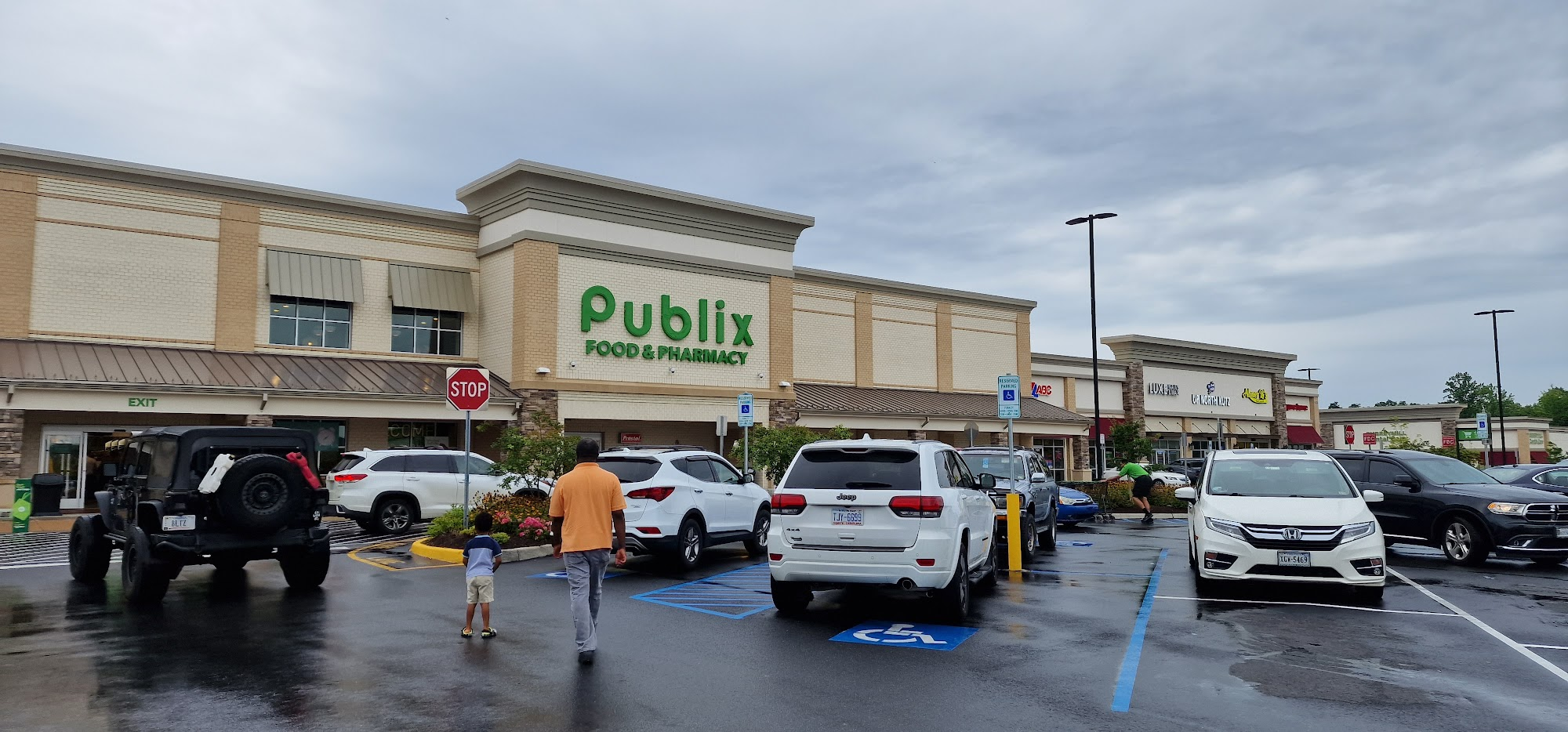
Just months after Stafford County supervisors approved a significant increase in the County’s real-estate tax rate, the Board approved an incentive agreement allowing Publix to receive up to $2.25 million in local tax reimbursements over the next 10 years.
The decision raises a basic question about tax fairness in Stafford: Why are residents being asked to pay more while a major corporation is being offered millions of dollars in tax incentives?
What Stafford approved for Publix
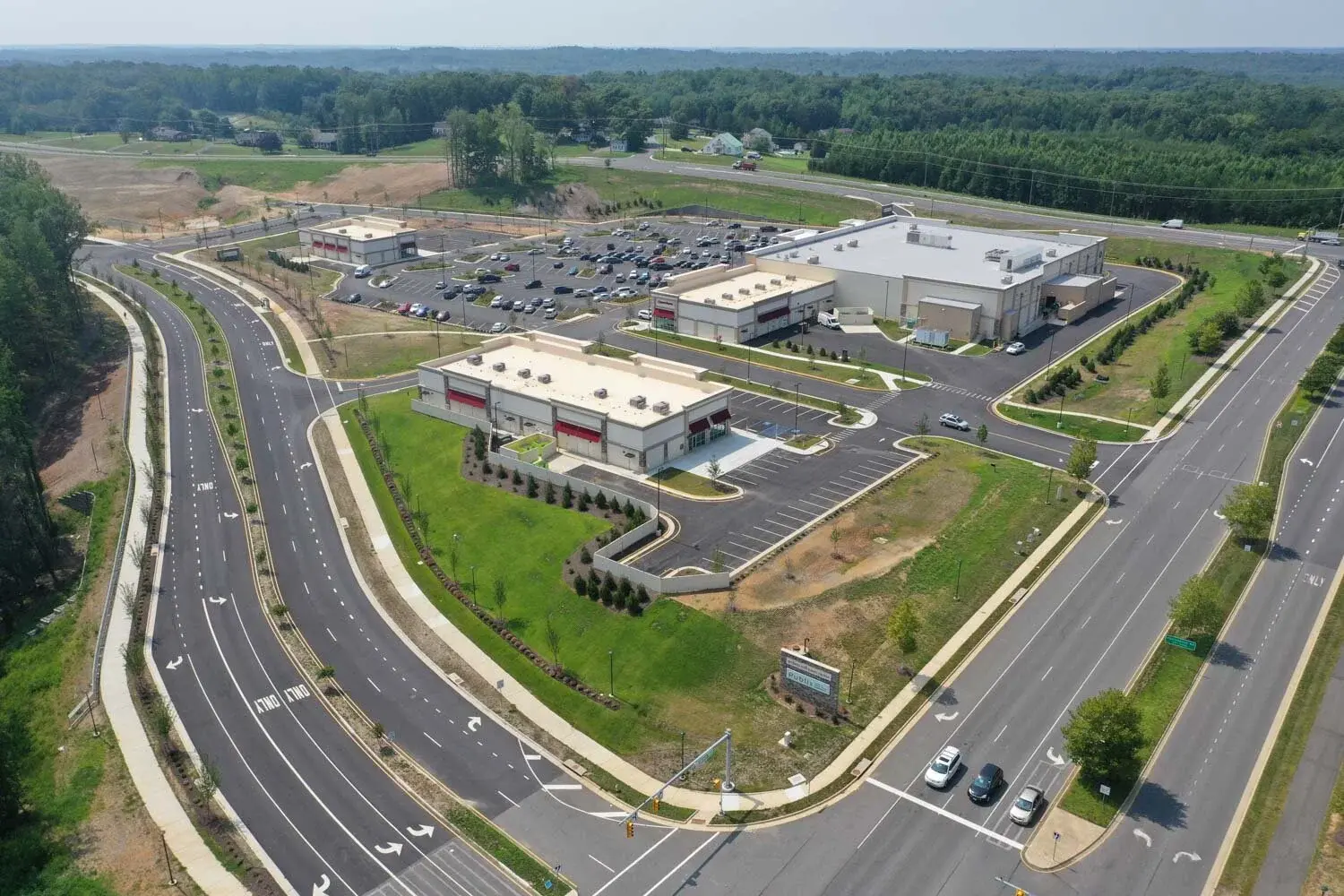
On September 1, the Stafford County Board of Supervisors voted 5–2 to approve an incentive agreement with Publix North Carolina LP for a second Stafford County grocery store. The new Publix is planned along U.S. 17/Warrenton Road, in front of the new Hartwood High School and across from the University of Mary Washington’s Stafford campus.
Under the agreement, Publix can be reimbursed for a portion of the net-new local tax revenue generated by the store for 10 years. The payments are performance-based; Publix must satisfy the agreement’s requirements each year.
Publix committed to approximately $32 million in capital investment and the creation and maintenance of 108 jobs. Stafford estimates the development could generate between $600,000 and $800,000 in net-new local tax revenue annually.
Economic Development Director Liz Barber told supervisors that Publix said it would not move forward with the Route 17 location without the incentive. Barber also said Publix initially requested approximately $1.3 million more than the package ultimately approved—an original request of about $3.55 million.
Just months earlier, Stafford raised property taxes
In April, the Board voted 4–3 to increase Stafford’s real-estate tax rate from $0.9236 to $0.9675 per $100 of assessed value. The fire levy also increased from $0.0131 to $0.014 per $100.
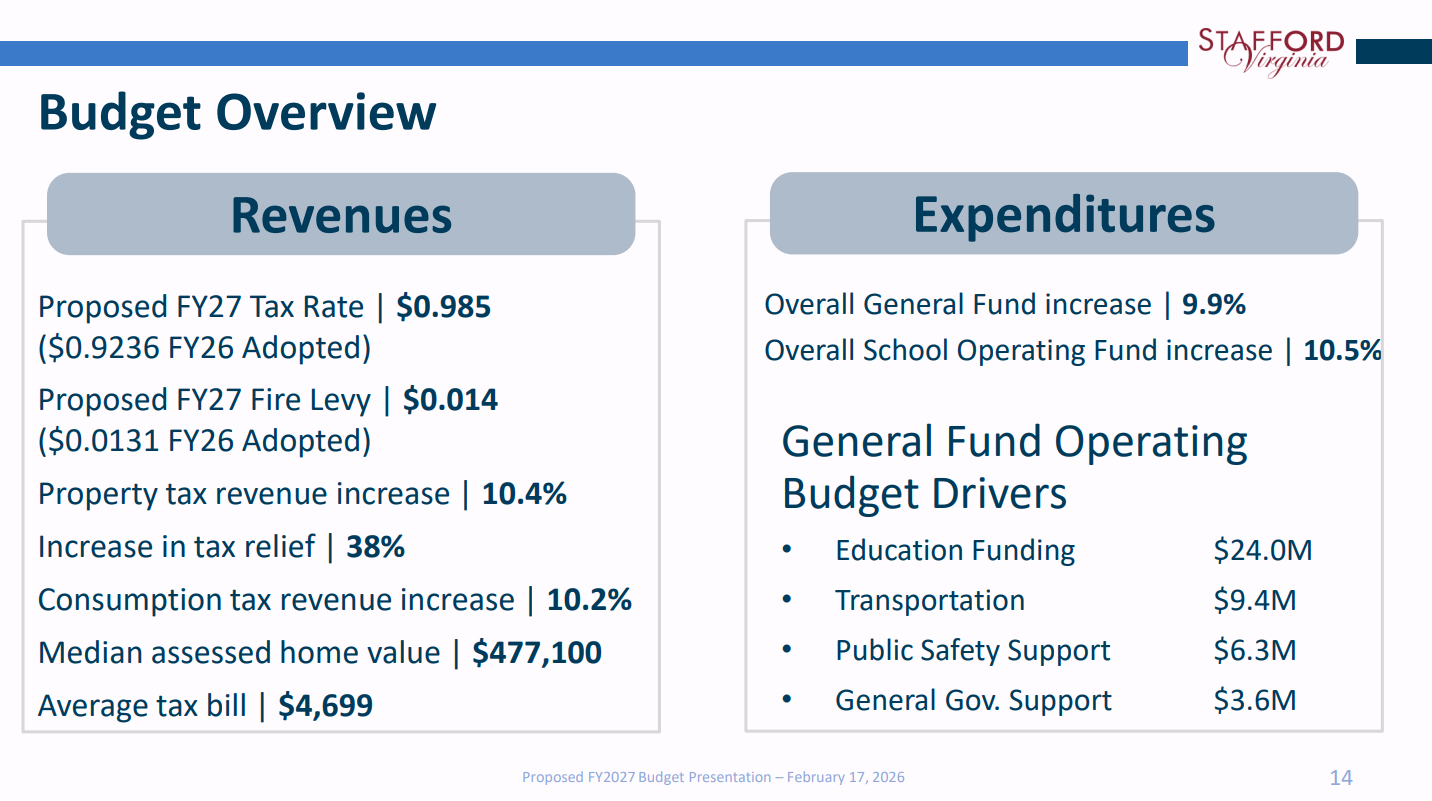
During the April 28 Board meeting, longtime Stafford resident Lisa Vose told supervisors that continually increasing property taxes were making it harder for her to remain in the county while living on a fixed income. Supervisor Pamela Yeung also expressed concern about the effect on homeowners, seniors and families on fixed incomes.
Supervisor Crystal Vanuch said she had consulted Commissioner of the Revenue Scott Mayausky and stated that Stafford property owners had experienced a 57% increase in taxes since 2021. Vanuch warned: “We are chasing people out of this county who can’t pay the tax bill.”
Important context: The 57% figure was stated publicly by Vanuch and attributed by her to discussions with the Commissioner of the Revenue. Save Stafford has not independently reconstructed every homeowner’s tax history; individual increases vary with assessments and other factors.
The County says it needs more revenue
County officials have described substantial cost increases tied to new schools, employees, public safety, inflation and tax-relief programs. County Administrator Bill Ashton has also warned that the next budget could be even more difficult despite this year’s tax increase.
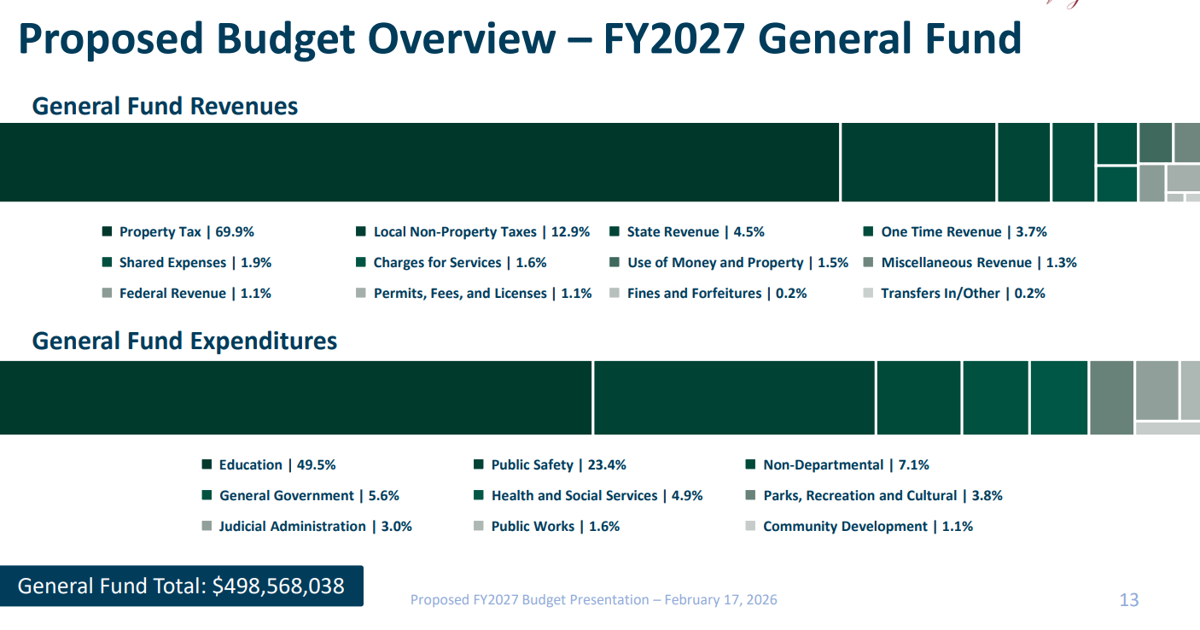
In June, supervisors also discussed a possible Business, Professional and Occupational License tax, or BPOL tax, which Stafford currently does not impose. Against that backdrop, the Publix agreement intensifies the debate over who should carry the County’s tax burden.
Two supervisors voted no
Supervisors Tinesha Allen and Pamela Yeung voted against the incentive. Yeung questioned why the County should subsidize a development if it is expected to generate enough revenue to succeed on its own.
“So if a project pencils out that kind of revenue on its own, I don’t think it needs taxpayer subsidy to get built,” Yeung said.
Allen noted that Publix already operates at Embrey Mill and built that store without this type of incentive package. She also pointed to Lidl, which already operates along Route 17.
“I need to understand why I have to give them a $2 million incentive to come,” Allen said.
Supporters say Stafford still comes out ahead
Supporters say Stafford is not handing Publix existing taxpayer money. Instead, the company will receive a portion of new tax revenue generated by the store. The County estimates $600,000 to $800,000 in annual new local revenue while expecting the development to attract additional restaurants and retailers.
Vanuch argued that Stafford could remain approximately $5 million positive over 10 years, compared with receiving only about $85,000 in real-estate taxes from the property if the development does not occur.
Without the incentive, Publix says it will not build. With it, Stafford gives up part of the new revenue but keeps the remainder while gaining a $32 million commercial investment and 108 jobs.
But residents are being asked to make the same kind of sacrifice
When Stafford needs more money for schools, public safety and infrastructure, homeowners are asked to contribute more through their tax bills. Those taxpayers do not receive a 10-year incentive agreement, and they cannot negotiate their property taxes based on whether they choose to stay in Stafford.
The question is not necessarily whether Stafford should welcome another Publix. It is whether the County should provide up to $2.25 million in tax incentives to a major corporation while increasing the burden on the people who already live here.
A question of priorities
The missing information
Before residents can fully judge the deal, Stafford County should make the complete financial analysis easily available. Residents deserve to know:
- Exactly which taxes Publix will be reimbursed.
- How the projected $600,000–$800,000 in annual net-new revenue was calculated.
- Whether the calculation accounts for customers shifting purchases from existing Stafford grocery stores.
- What happens if Publix creates fewer than 108 jobs, and whether wage or full-time requirements apply.
- What qualifies toward the promised $32 million investment.
- Whether Stafford can recover payments if Publix closes early or fails to meet its commitments.
- What Publix originally requested and what supports its statement that it would not build without assistance.
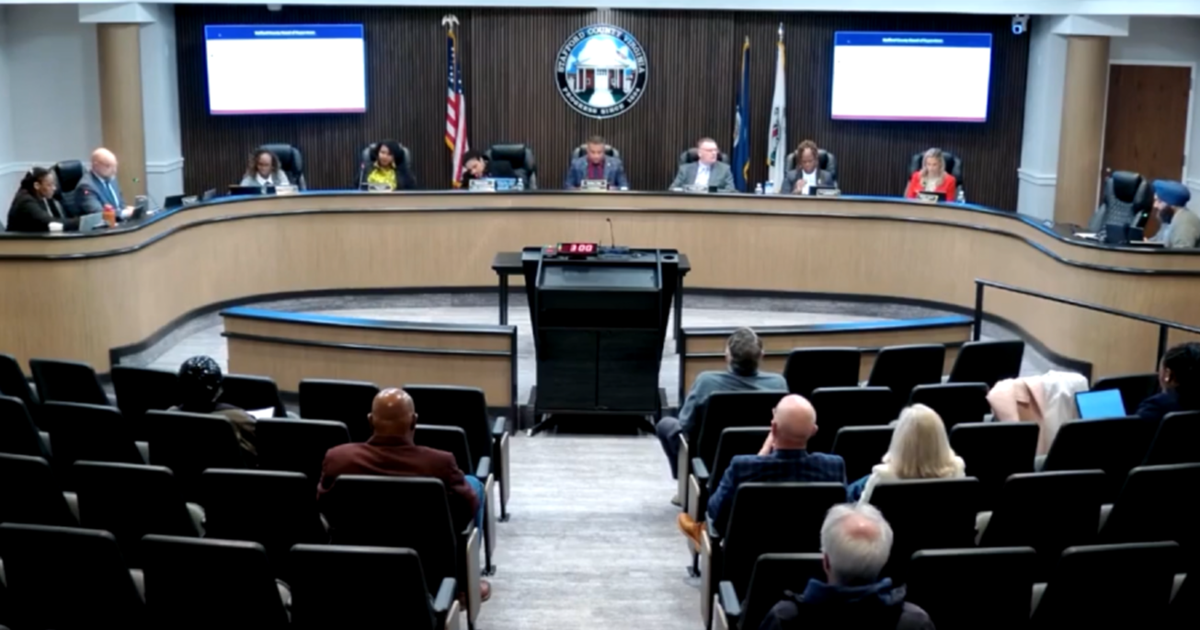
Save Stafford’s position: Economic development can broaden Stafford’s tax base and should be encouraged. But incentives should face the same scrutiny applied when deciding how much residents must pay. Stafford taxpayers are being asked to pay more. They deserve a clear accounting of why Publix should be allowed to pay less.
Sources, documents & image credits
Read the original record
Stafford County — September 1, 2026 Board meeting overviewSeptember 1, 2026 · Open original source ↗Stafford County — September 1 agenda packet and Publix incentive agreementSeptember 1, 2026 · Open original source ↗Stafford County — FY2027 adopted budget summaryApril 2026 · Open original source ↗Stafford County — Proposed FY2027 Budget PresentationFebruary 17, 2026 · Open original source ↗Compare the financial stage, linked public documents and outstanding verification gaps.
View financial record →Support Save Stafford
Independent local information. No paywalls. No advertising.Research like this takes time and sometimes requires obtaining public records. Community support helps Save Stafford continue making this information freely available.
No subscription required. Contribute only if you choose. Financial contributions do not purchase editorial influence.